

What to do when crypto goes quiet and your group chat goes silent
You know the phase, charts go sideways, volatility cools off and nobody is posting rocket emojis, even the “next 100x” person has gone quiet. Let’s call it the boring phase. The stretch where crypto feels like it is doing almost nothing.
Here is the twist.
This phase is often where the most important work happens. Not because it is exciting, because it is quiet enough to think clearly.
1. Reassess, do not react
Sideways markets are ideal for reviewing your portfolio.
Instead of asking “When will it pump?”, ask:
- Why do I hold this?
- If trading altcoins, is it outperforming Bitcoin?
- Does it still have strong fundamentals?
- Has anything structurally changed?
A smarter lens. Relative strength vs Bitcoin
During slower phases, stronger assets often reveal themselves quietly.
If a coin consistently:
- Holds structure better than BTC
- Recovers faster
- Maintains steady volume
That tells you something. If it loses ground against BTC in calm conditions, that also tells you something.
This is not about chasing performance, it is about identifying resilience.
How to quickly see what’s outperforming BTC
If you want to see which coins are outperforming Bitcoin, the fastest way is to use TradingView.
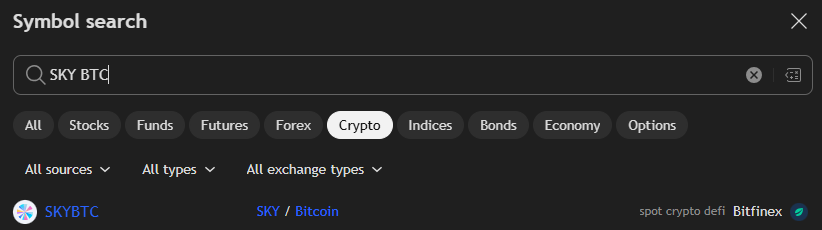
In the search bar, type:
(Coin Name) (space) BTC
For example: SKY BTC
Click the relevant chart and you will see the price of that coin measured against Bitcoin, not USD.
Source: tradingview
SKY Example
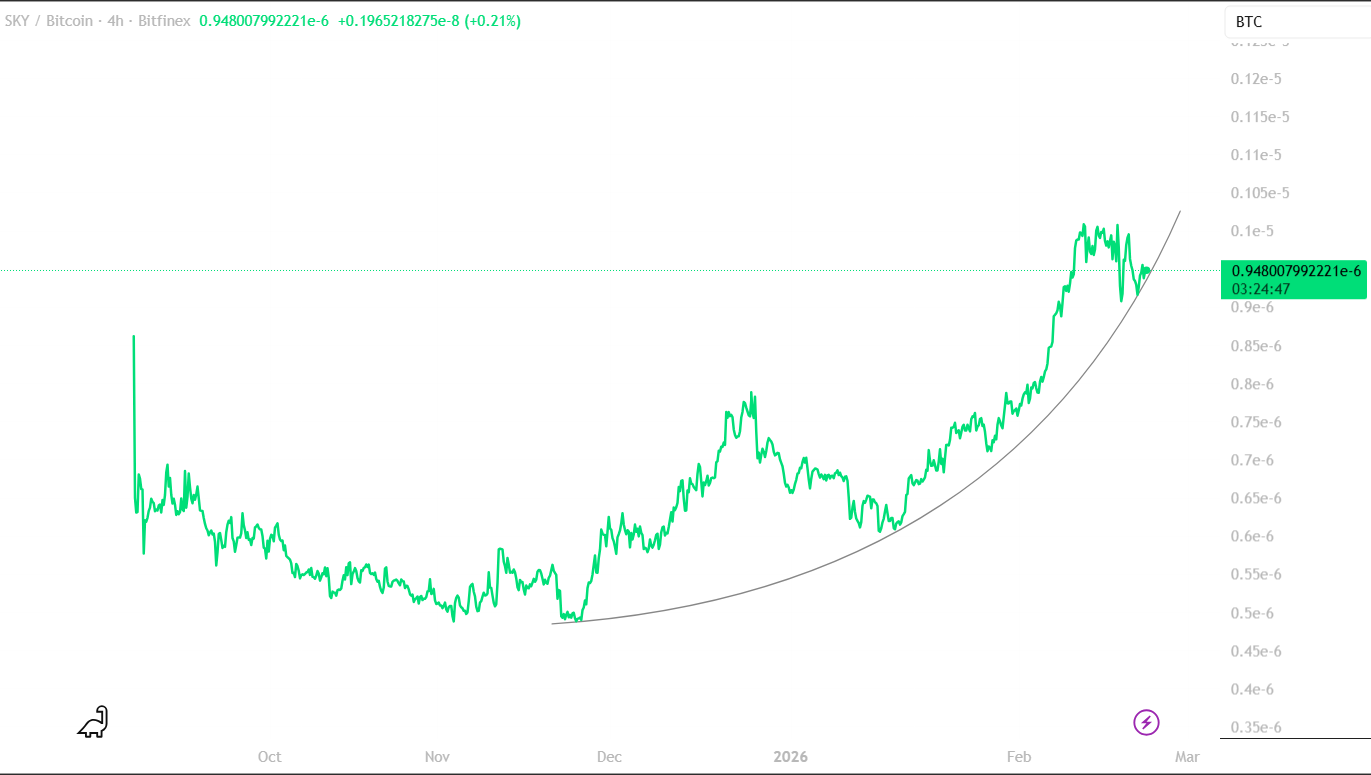
Below is a SKY vs BTC chart. Since bottoming in November and December 2025, SKY has been trending higher against BTC. That means it has been gaining strength relative to Bitcoin.
In simple terms:
If you held SKY over that period instead of holding BTC, your gains would have been stronger. This is called relative strength. It does not tell you what will happen next, it simply shows where capital has been flowing recently.
During quieter phases, this type of comparison can help you understand which assets are showing structural strength rather than just absolute price movement.
Source: tradingview SKY/BTC
Not all Coins Reclaim Previous Cycle Highs
One of the biggest misconceptions in crypto is:
“If it hit an all-time high once, it will definitely do it again.”
History suggests otherwise.
Across cycles:
- Many large caps never reclaim prior highs
- Mid caps rotate out of relevance
- Narratives shift
- Liquidity concentrates into fewer assets
DOT example:
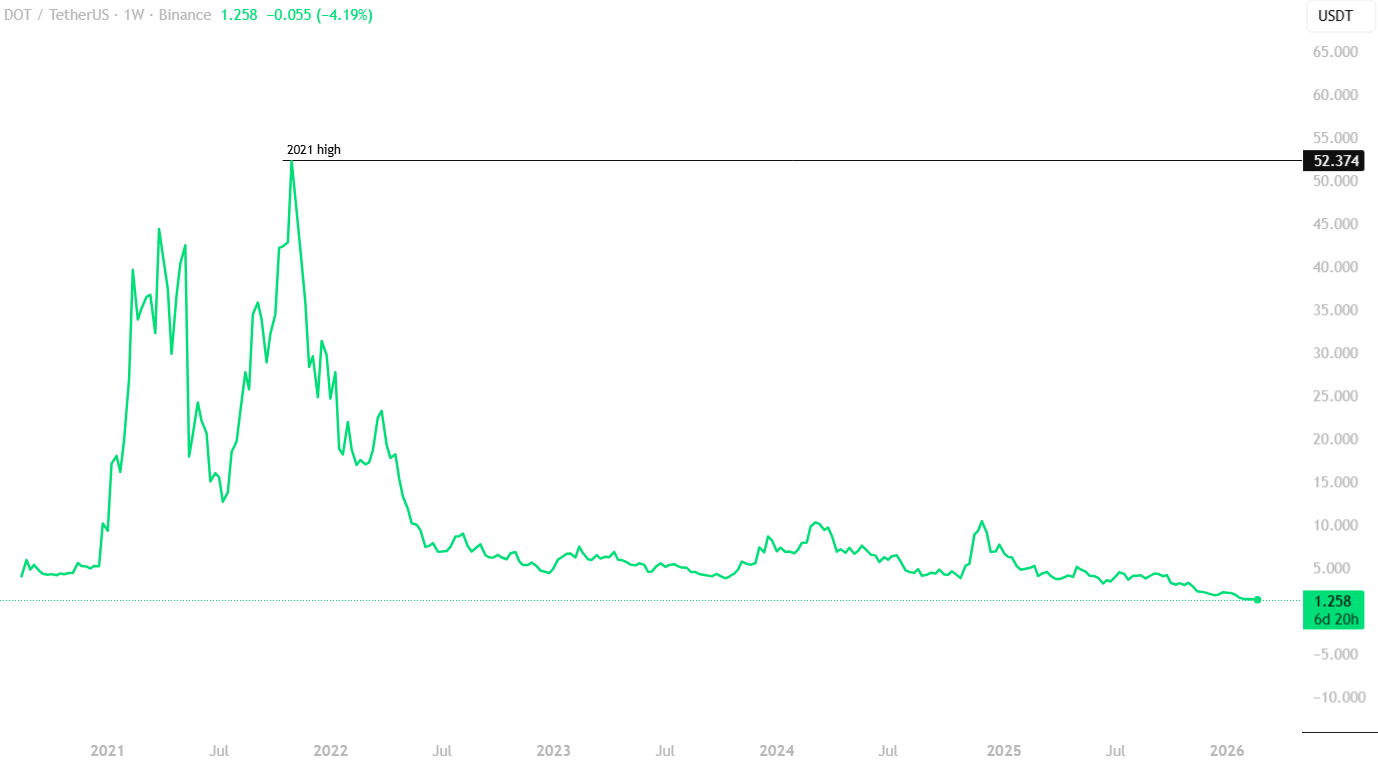
DOT was one of the dominant large-cap ecosystems in the 2021 cycle. In later periods, attention and liquidity rotated toward newer ecosystems and narratives, including chains such as Sui, Hyperliquid and other high-momentum sectors. That shift in mindshare is one reason prior leaders do not always reclaim previous highs.
Not all prior leaders reclaim their highs, that is why quieter phases can be valuable. They provide time to reassess conviction, review supply dynamics, compare relative performance, and ensure portfolio positioning reflects current market structure rather than past expectations.
2. Upgrade your crypto IQ
Think of this as off-season training. When price is not distracting you, learning becomes easier.
Learn basic chart structure
Platforms like TradingView allow you to:
- Identify support and resistance
- Understand trend structure
- Analyse volume
- Compare performance between assets
You do not need to become a trader, but understanding structure can reduce emotional decisions.
Learn token mechanics
If you upgrade one skill, make it this.
Understand supply.
Key concepts:
- Circulating supply versus total supply
- Unlock schedules
- Emissions
- Market cap versus fully diluted valuation
- Liquidity depth
A project can have a strong narrative, but heavy unlocks or emissions can still influence price behaviour significantly. The boring phase is when you can research this properly.
SOL example
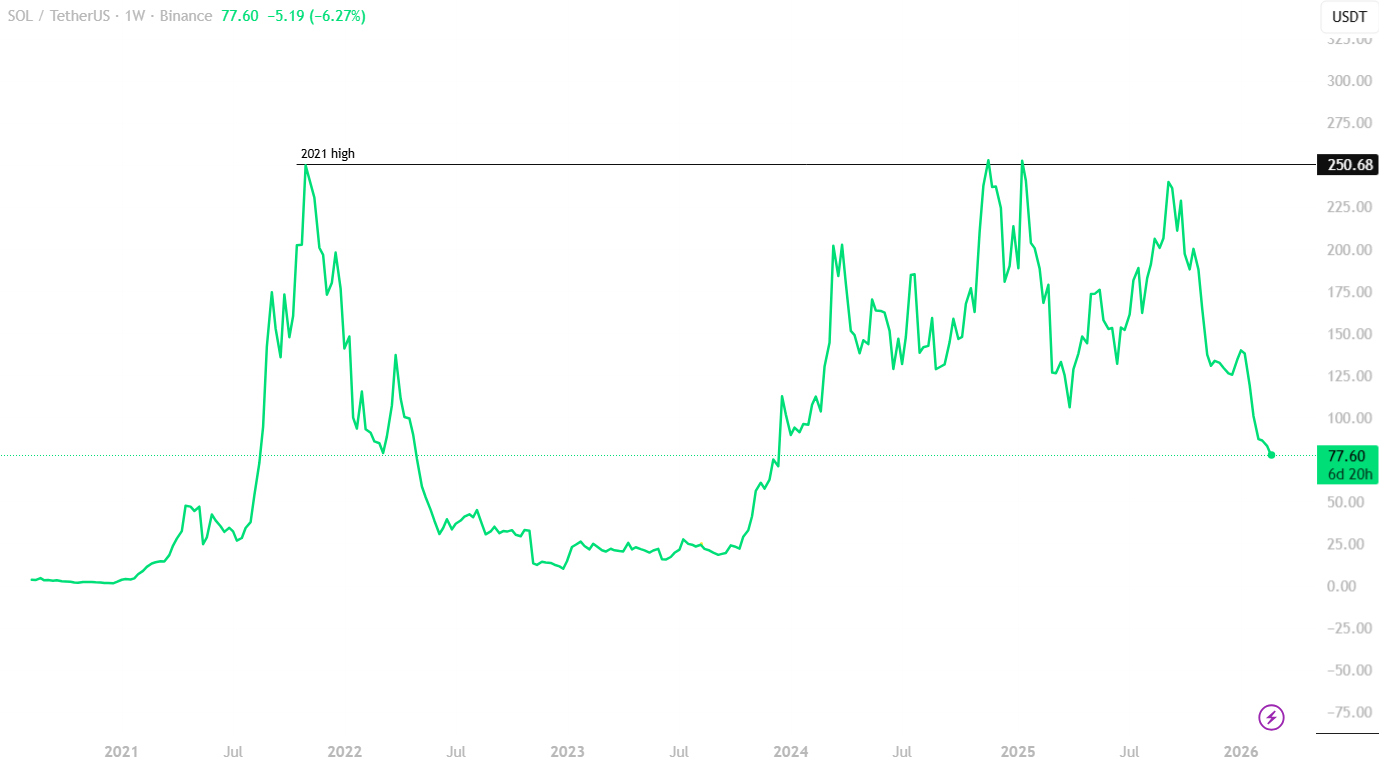
In the 2021 peak the total market cap for SOL was roughly 100B. In the 2025 peak it was valued at around 200B. Why does the price not reflect this?
Source: tradingview SOL/USDT
Between cycles, circulating supply increased significantly due to ongoing emissions and token unlocks. That means even though total network valuation expanded, each individual token faced more supply. When supply grows, demand must grow even faster for price to reclaim or exceed prior highs.
The boring phase rarely announces its importance while you are in it, but it often defines what comes next. The decisions made here tend to echo the loudest when momentum returns. Part two drops next week, where we step beyond individual assets and unpack risk management frameworks, the role of macro and geopolitics, and the continued shift of crypto into a broader digital asset class.
This article is for general information only and does not constitute financial advice. It does not take into account your personal objectives, financial situation, or needs. Digital assets can be volatile and involve risk.


