

The Trend Era
Bitcoin and altcoins are no longer playing the same game.
Bitcoin remains the benchmark asset in crypto, with the deepest liquidity, the strongest brand, and the longest record of recovering from brutal resets. The year-by-year return profile helps explain that distinction.
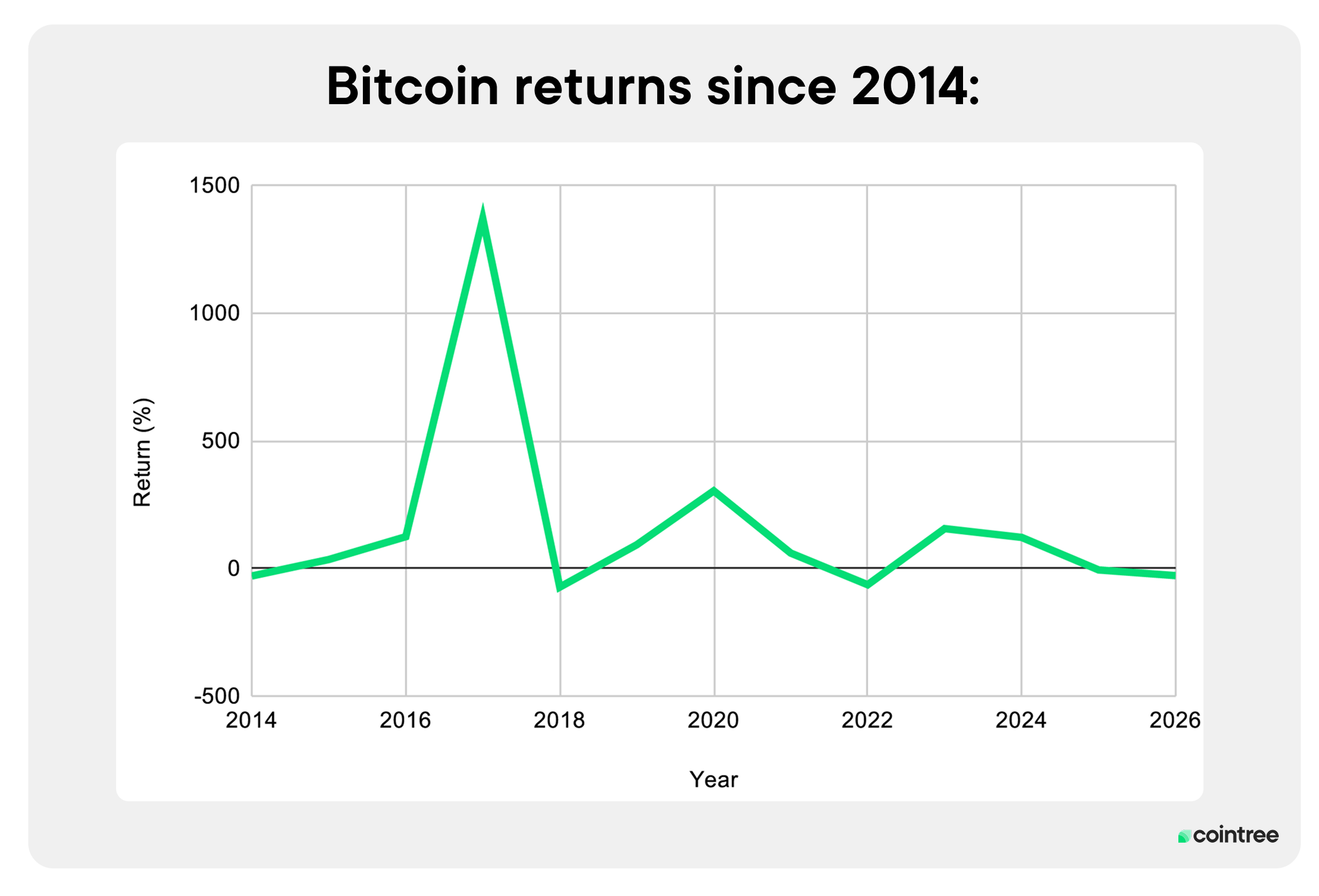
Volatile, yes. But compared with the average altcoin, BTC still has the clearest history of surviving drawdowns, reclaiming leadership, and pulling capital back in when confidence returns.
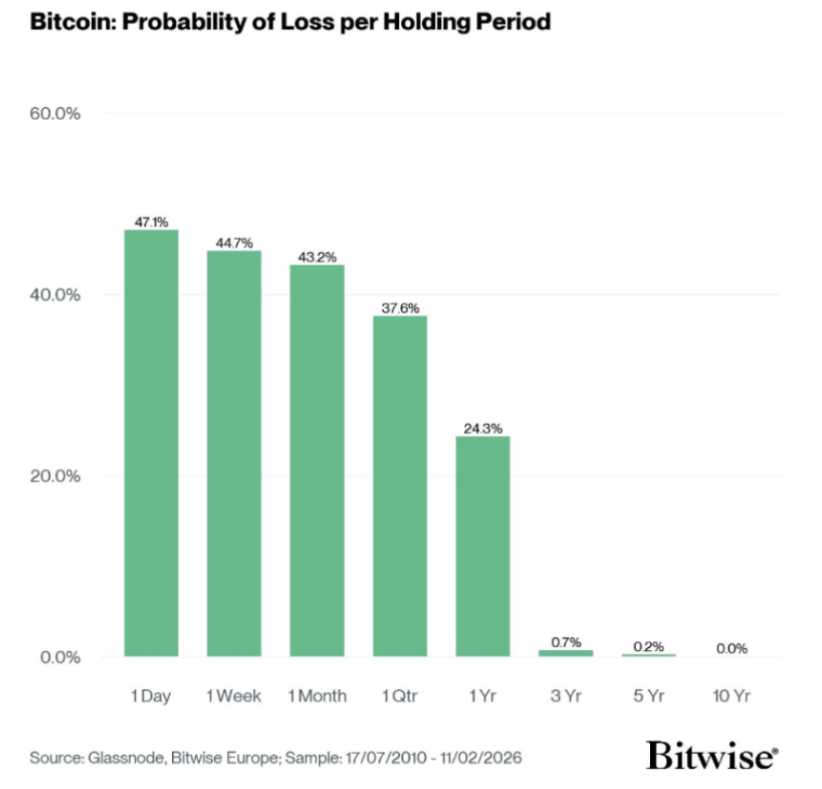
That is why many market participants still view Bitcoin as the benchmark asset in crypto, while altcoins are increasingly treated as shorter-horizon, trend-driven assets. BTC can get smashed in the short term, but it has repeatedly proven it can recover, many altcoins do not.
Bitcoin dominance also helps reinforce that point.
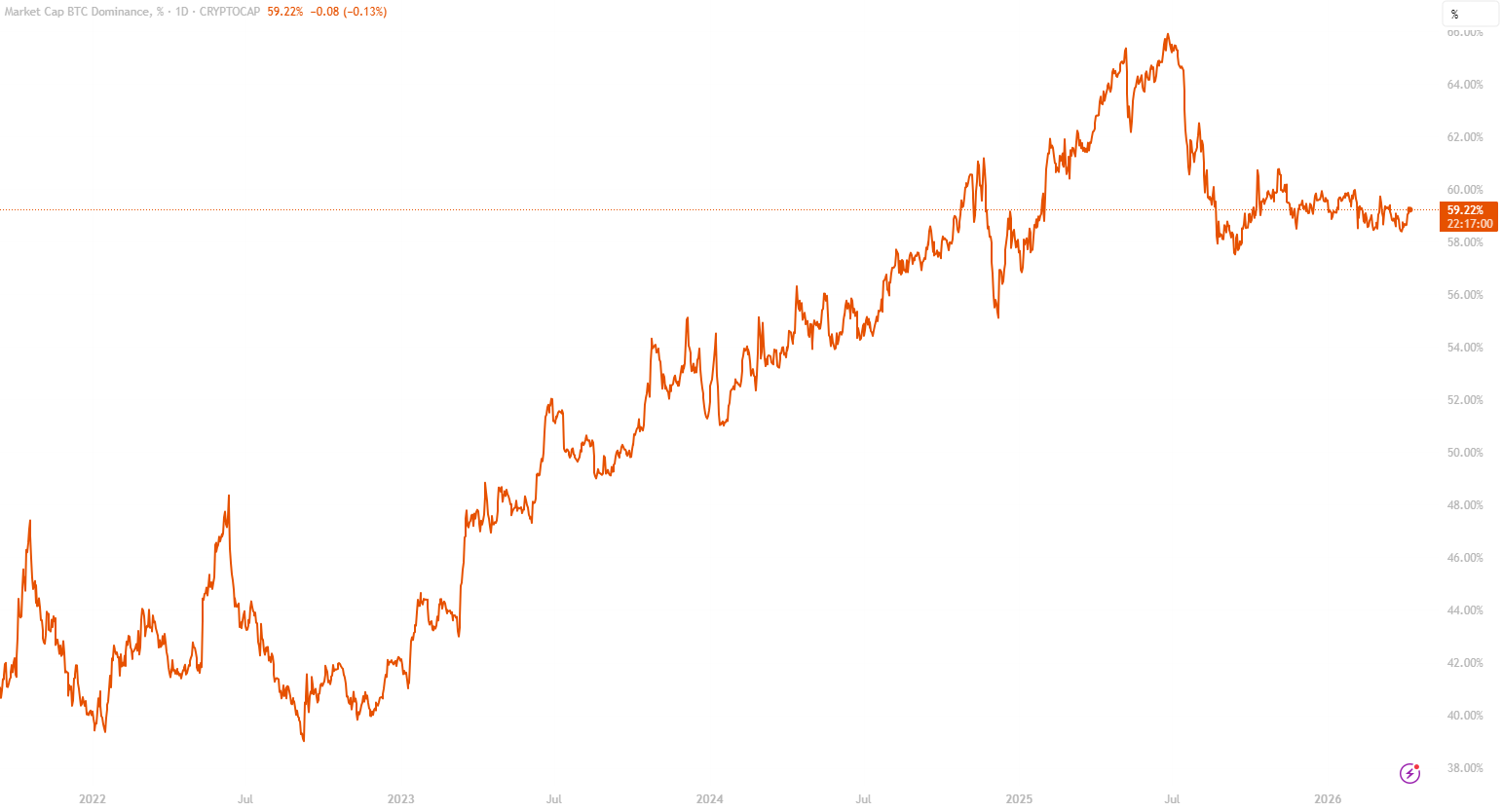
Source: Tradingview BTCD
That matters, because the old crypto playbook was simple. Bitcoin ran, Ethereum followed, and then altcoins eventually got their turn. That was the classic altseason mindset. BlockchainCenter still defines altseason the same way today. If 75% of the top 50 coins outperform Bitcoin over the last 90 days, it is altseason.
That does not mean opportunity is gone. It means the market has changed shape. The better way to describe this cycle is not “alts are dead.” It is this: crypto has become a fragmented, attention-driven rotation market. In other words, this is the trend era.
Why 2021 felt easier
The 2021 cycle was broad, liquid and, in many ways, easier. The total crypto market cap climbed to around $2.8 trillion in November 2021, according to New York Fed material. NFTs were also exploding into the mainstream. CNBC, citing NonFungible.com, reported that NFT trading reached more than $17 billion in 2021, up from about $82 million in 2020. When that much capital, hype and speculation is hitting the market at once, more parts of the board can move together. NFTs also acted like a turbocharged beta trade for a lot of market participants.
Much of that activity lived on Ethereum. So in many cases traders were not only buying a speculative asset, they were buying a speculative asset priced in another speculative asset. If the NFT held value in ETH and ETH itself was rising, the move in dollar terms could become even more aggressive. That helped parts of the 2021 market go vertical.
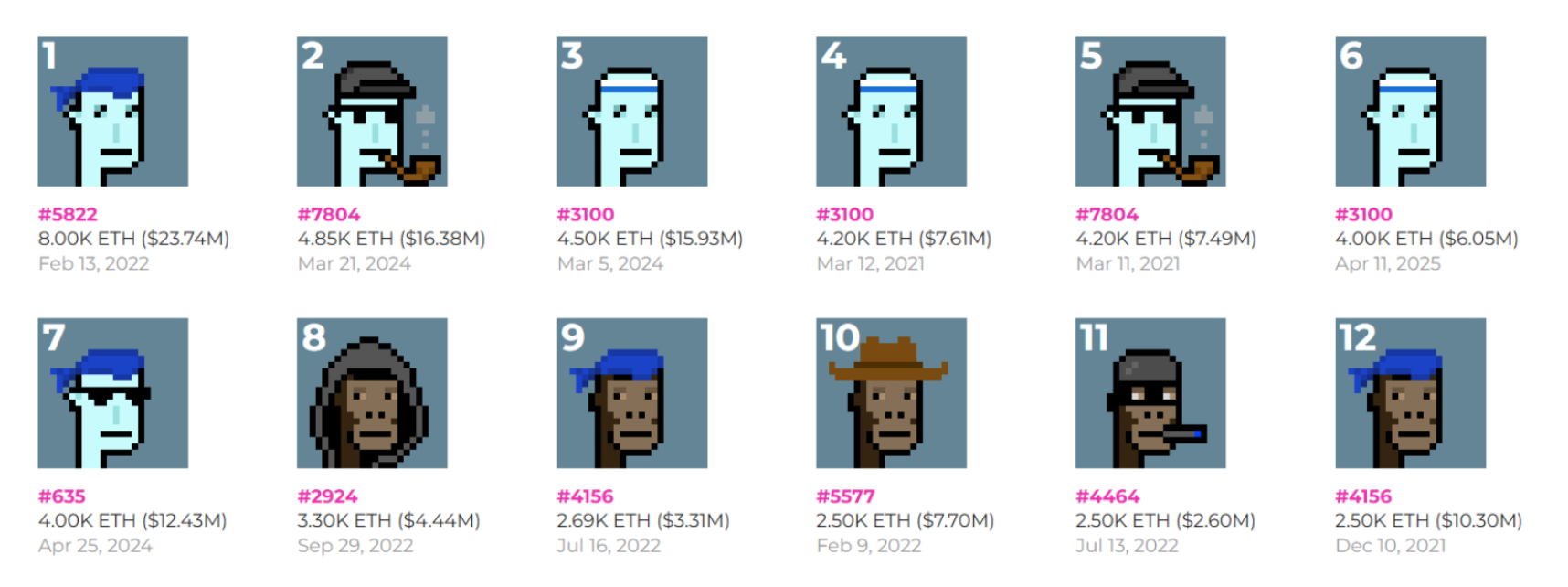
Source: Biggest CryptoPunks sales
The other key difference was supply. There were still plenty of tokens in 2021, but nothing like today’s firehose. The market did not have to absorb the same volume of constant launches, meme coins, ecosystem copycats, incentive tokens and fresh supply all competing for the same wallet attention. That made it much easier for a rising tide to lift a wide basket of altcoins at once.
Now the market is flooded
Today, crypto does not just have to deal with price cycles. It has to deal with supply overload.
CoinGecko says 53.2% of all cryptocurrencies on GeckoTerminal have failed, and that 11.6 million tokens failed in 2025 alone. That is an extraordinary number. It suggests the problem is no longer just “finding the next gem.” It is surviving in a market where an endless stream of new assets is fighting for the same liquidity and attention.
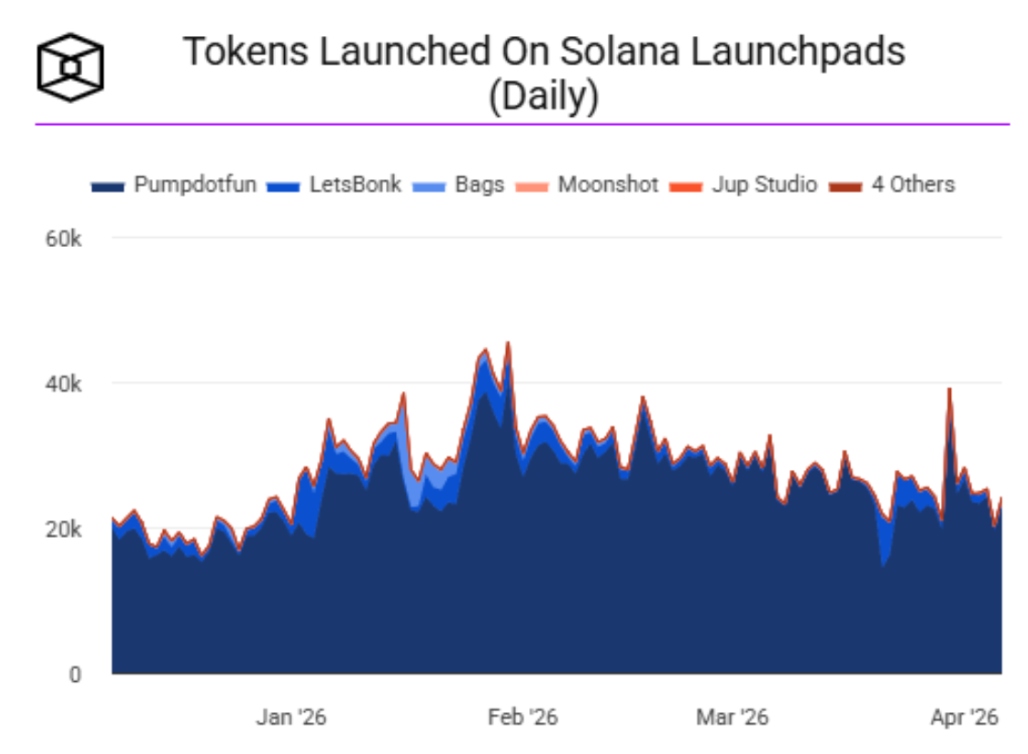
Solana launchpads were estimated to be producing about 22,176 tokens per day on a 30-day average, with pump.fun alone estimated at roughly 19,538 per day over that same period.
Source: Theblock.co
That is what makes this cycle feel harder for everyday traders. It is not that no altcoins can run. They absolutely can. It is that the market is now crowded with so much new supply that broad, passive altcoin exposure is less reliable. More coins are competing for the same money. More narratives are fighting for the same mindshare. More traders are rotating faster. So even decent projects can get left behind.
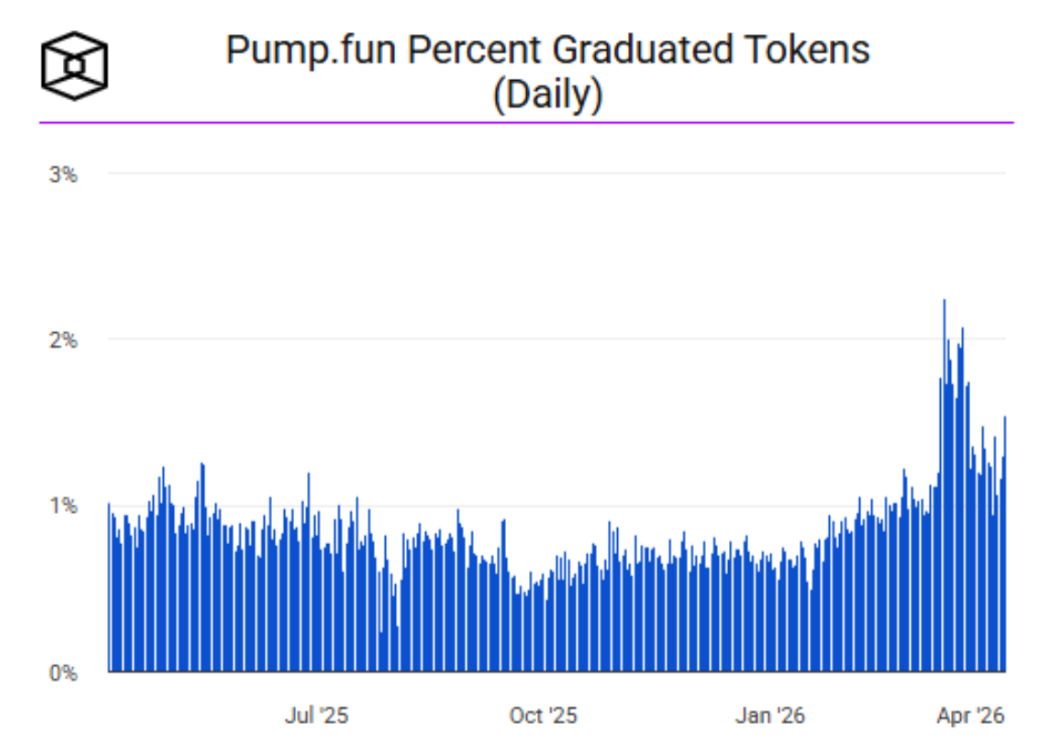
Another sign of how competitive this market has become is the pump.fun graduation hurdle. On pump.fun, new tokens begin life on a bonding curve, where the price moves automatically as traders buy and sell. A token is considered graduated once it attracts enough demand to move off that curve and into a PumpSwap liquidity pool, where it can trade more like a normal market asset. Pump.fun says trades before graduation happen on the bonding curve, while trades after graduation happen on PumpSwap, and that when a coin migrates its LP tokens are locked and burned.
The takeaway is simple. Launching a coin is easy. Graduating is hard. As per the chart below on average under 1% of coins graduate. The hardest part is finding one of the rare few that can attract enough liquidity and attention to survive the launchpad phase at all.
Source: Theblock.io
Attention now moves in waves
This is where the trend-era idea really becomes useful.
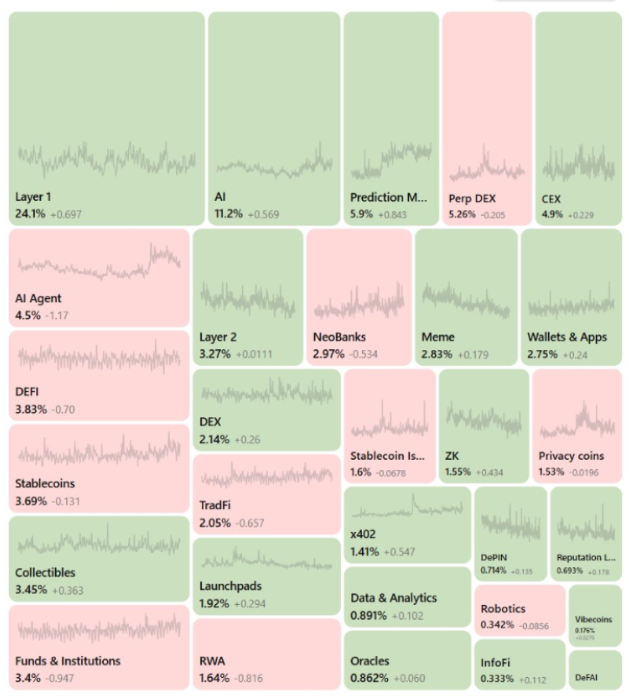
CoinGecko’s narrative research found that in 2025, meme coins and AI together captured 46% of crypto narrative interest, while the top 20 narratives accounted for 70.11% of investor interest across 269 tracked narratives. That is a huge clue. It tells us attention is not spread evenly across the market. It is clustering hard into a handful of sectors at a time.
Those themes are not static. One phase might belong to AI. Then it shifts to AI agents. Then DeFi gets a bid. Then an Ethereum ecosystem trade catches attention. Then privacy coins wake up. Then meme coins run again. Then a specific Layer 1 becomes hot and all of a sudden the meme coins, infra plays and ecosystem tokens around that chain become the focus. It is the same market, but the money is moving in waves rather than lifting everything together.
Source: Cooke.fun 08/04/2026
CoinGecko found that in 2025, major crypto narratives ranged from roughly -76.7% to +185.8% on average, depending on the sector. In 2024, the spread was even more dramatic: AI returned 2,939.8% on average, memecoins 2,185.1%, and RWA 819.5%. That is not a market where everything wins together. That is a market where the right theme at the right time can massively outperform, while other sectors go nowhere or bleed lower.
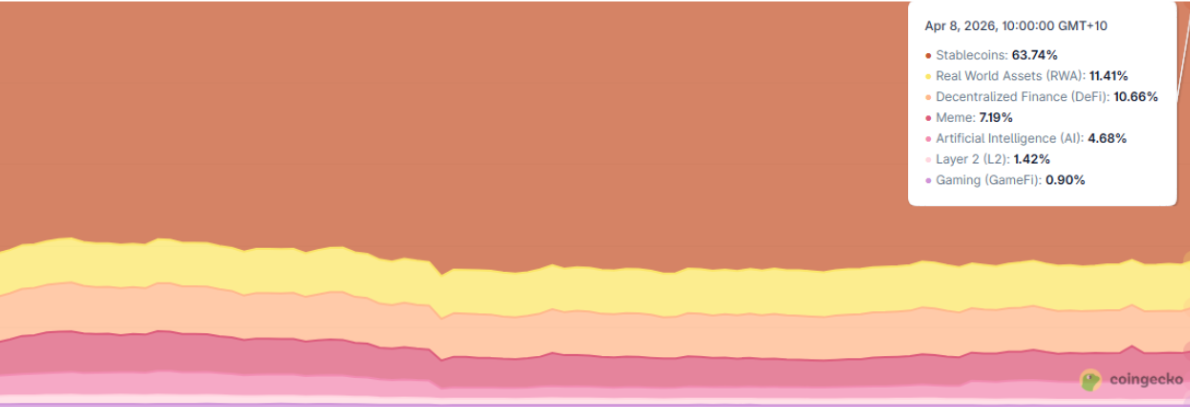
In 2026, as crypto has chopped sideways, capital has gravitated toward stablecoins first, then real-world assets, as traders prioritise capital preservation and a steadier risk profile.
\ Source: Coingecko domination
What the trend era means in practice
The old market rewarded patience across a wide basket of alts. This one rewards timing, selectivity and awareness.
In a broad altseason, you could buy a decent coin, wait long enough, and often get bailed out by the market. In a trend era, that is much less reliable. By the time a narrative is everywhere on X, on YouTube and across Telegram, a big part of the easy move may already be gone. Many traders confuse narrative awareness with real edge, and end up becoming exit liquidity for earlier entrants.
That is why “just hold and hope” has become a weaker strategy outside BTC.
If capital is flowing into AI, the winners may run hard while unrelated coins do nothing. If the market rotates into privacy, old DeFi laggards may not magically catch up. If meme coins take over again, the move may be violent but short-lived. In other words, being “right eventually” is no longer enough. You can still lose simply by being late, by choosing the wrong expression of the trend, or by staying too long after the narrative has peaked.
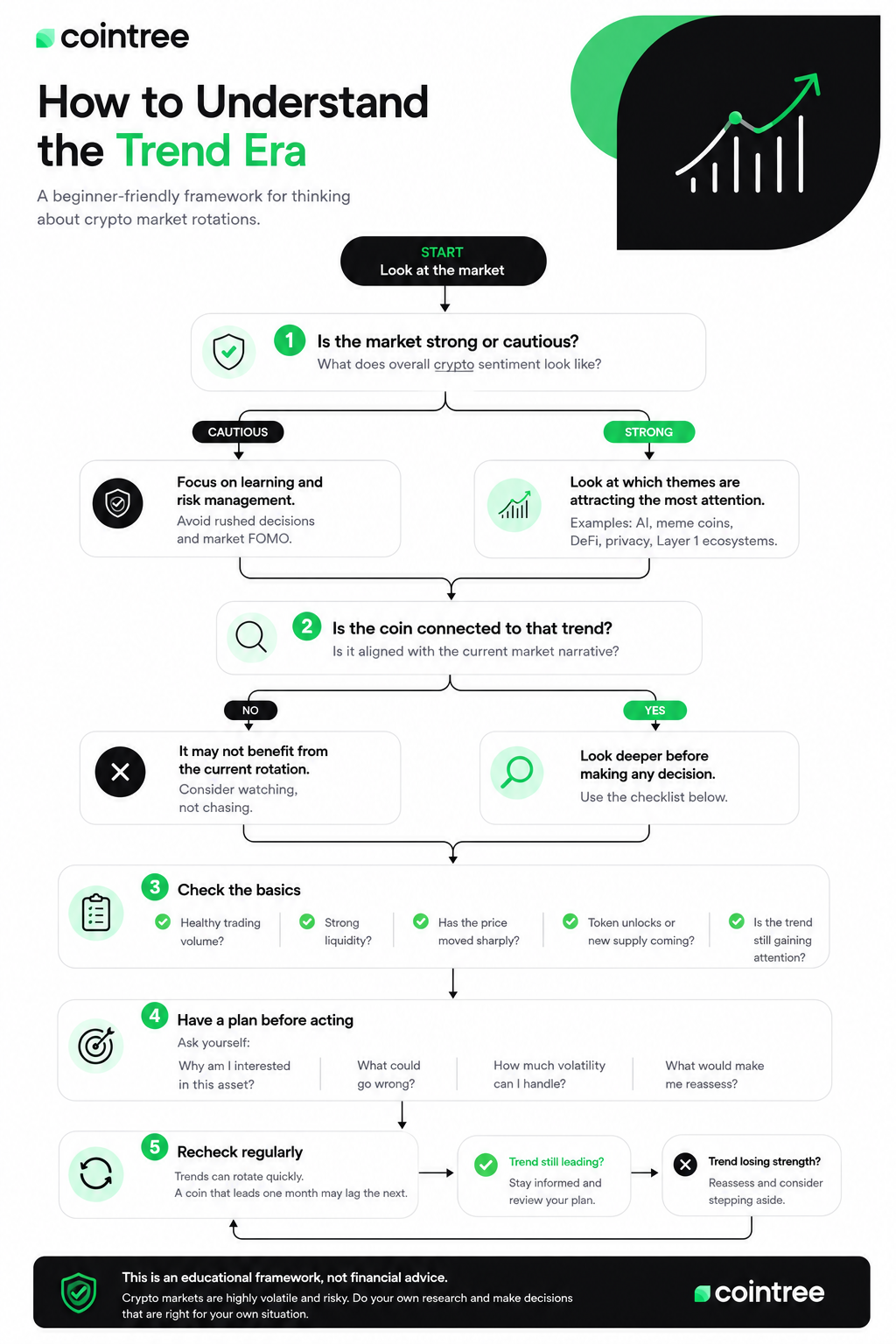
A simpler way to think about risk
One way to think about risk in this market is to separate longer-term benchmark assets from more speculative, trend-driven altcoin exposure.
That does not mean readers need to chase every new narrative. It means the market is asking better questions now. Is this trend actually leading, or is it just loud on social media? Is liquidity supporting the move, or is it all thin volume and hype? Has the narrative already become crowded? Is fresh supply still coming? Is the leader still leading? Those questions matter more in a trend era than simply asking whether a coin looks “cheap.”
The bottom line
Crypto has not stopped creating opportunities. It has just become less forgiving. The old cycle was broader. This one looks more concentrated. The old game often rewarded sitting on a wide basket of alts and waiting for a turn. This market increasingly rewards understanding where liquidity and attention are flowing, knowing when a narrative is becoming crowded, and reassessing when conditions change.
Bitcoin still stands apart in the eyes of many market participants because of its fixed supply narrative, staying power and longer market history. But outside BTC, this market looks less like one giant altseason and more like a series of narrative waves. That is the trend era. And in the trend era, attention matters, but attention without timing is just entertainment.
This article is for general information only and does not take into account your personal objectives, financial situation or needs. It is not financial advice.


