

Digital Collectibles Are Quietly Replacing NFT Hype
A few years ago, NFTs were impossible to ignore, and if you were anywhere near crypto during the last bull run, you probably remember how wild it felt.
It was fun, chaotic, risky and strangely cultural all at once. CryptoPunks and Bored Apes became online status symbols. New collections were launched every minute. Discord servers were moving faster than people could read them. Floor prices were treated like live sports scores. Some projects felt like the future of internet culture. Others felt dangerous before the mint even opened.
I was involved in that cycle, and the energy was hard to explain unless you were there. It was creative, it was speculative, it was community-driven and it was messy.
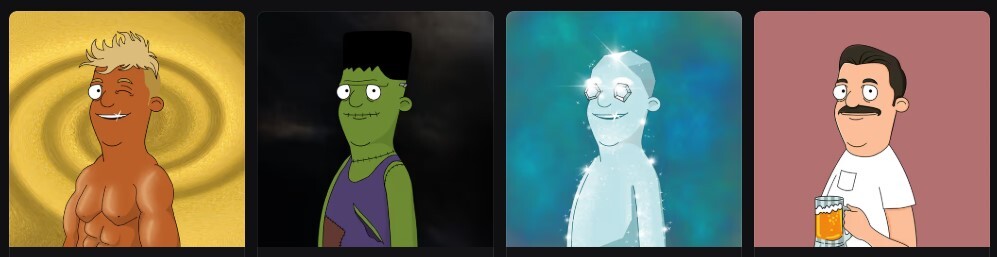
I still remember my first NFT mint like it was yesterday. At the time, I was a new dad, so a project called CryptoDads caught my eye. I managed to get on the whitelist by chatting in the Discord server, which was basically how a lot of NFT communities worked back then. If you were early, active and lucky, you had a chance to mint.
Minting is the process of creating an NFT for the first time on the blockchain. It is the moment a digital asset is officially recorded on-chain, giving it a unique identity and verifiable ownership. As a collector, minting means you are among the first to claim the NFT directly from the source.
Come mint day, I purchased three CryptoDads for around A$100 each. Then came the reveal...
Each NFT was part of a 10,000-piece collection, and after minting, collectors got to see how “rare” their Dads were. Once they landed in my wallet, I did what almost everyone did during that cycle. I stared at OpenSea listings for the next few days, watching the floor price move like it was a live sporting event. About three days later, one CryptoDad was worth around $11,000 AUD.
At that point, my brain did what every degen brain did in 2021. “This could be the next Bored Ape.” So I held.
Then the team announced CryptoMums. At first, I thought that was great. More NFTs. More community. More upside. More money. The Mums were free too if you held a dad, which made it feel like a win.
What I did not understand at the time was dilution. A few days later, my unrealised gains of roughly $33,000 AUD had fallen to around A$2,000. And yes, those CryptoDads still live in my wallet today.
Source: Opensea.io: Cryptodads
That was the NFT market in one story. Exciting, weird, emotional, greedy, creative, painful, very online. Then the broader market turned.
Floor prices fell. Trading volumes dried up. Many projects that once promised to become the future of internet culture quietly disappeared. For a while, the easiest conclusion was that NFTs were dead, but that misses the bigger story.
The first version of the NFT market broke. What remains is smaller, more selective and potentially more interesting.
NFTs are not coming back as the same speculative mania that defined 2021. They are starting to look more like digital collectibles, brand assets, tokenised trading cards, gaming items, community assets and fine art.
Source: Coingecko: Total NFT Market Capitalization
First, what is an NFT?
An NFT, or non-fungible token, is a unique digital token recorded on a blockchain.
Unlike Bitcoin or Ethereum, where each unit is interchangeable, every NFT is distinct. That makes NFTs useful for representing ownership of digital art, collectibles, gaming items, memberships, tickets, profile pictures or even tokenised physical assets.
The important word is ownership. NFTs gave people a way to own, trade and display digital items in a way that was visible on-chain. For the first time, digital objects could have scarcity, provenance and a public ownership history. That was the powerful part, the messy part was what happened next.
The boom got out of control
The NFT boom was not just about art. It was about identity, speculation, community and status all hitting the market at the same time.
People were not only buying images. They were buying access to private communities, online flexes, future promises, whitelist spots, token rumours and the chance to flip into the next big collection.
For a while, it worked. OpenSea volumes exploded, Ethereum NFT mints surged, profile-picture collections became the centre of crypto culture and some projects became genuine internet brands, while others were built almost entirely on hype. That is where the problems started.
Too many collections launched with weak roadmaps. Too many communities were built around floor prices instead of real culture. Too many buyers were chasing short-term momentum rather than long-term collecting. In some cases, NFT teams kept going back to their own communities for more.
Azuki is one of the clearest examples. After becoming one of the biggest NFT projects of the last cycle, the team launched Azuki Elementals in 2023, raising around 20,000 ETH from existing Azuki and BEANZ holders. At the time, that was roughly US$38 million.
The problem was not just the money raised, it was what happened next. Many holders felt the new collection looked too similar to the original Azukis, raising concerns that the team had diluted the brand rather than expanded it. The backlash was fast, and Azuki later admitted it had “missed the mark”.
That moment captured one of the biggest issues of the NFT boom. Communities were told they were early believers, but sometimes, they became the customer again. When liquidity left the market, the difference became obvious. Some NFTs had lasting cultural value, however, most did not.
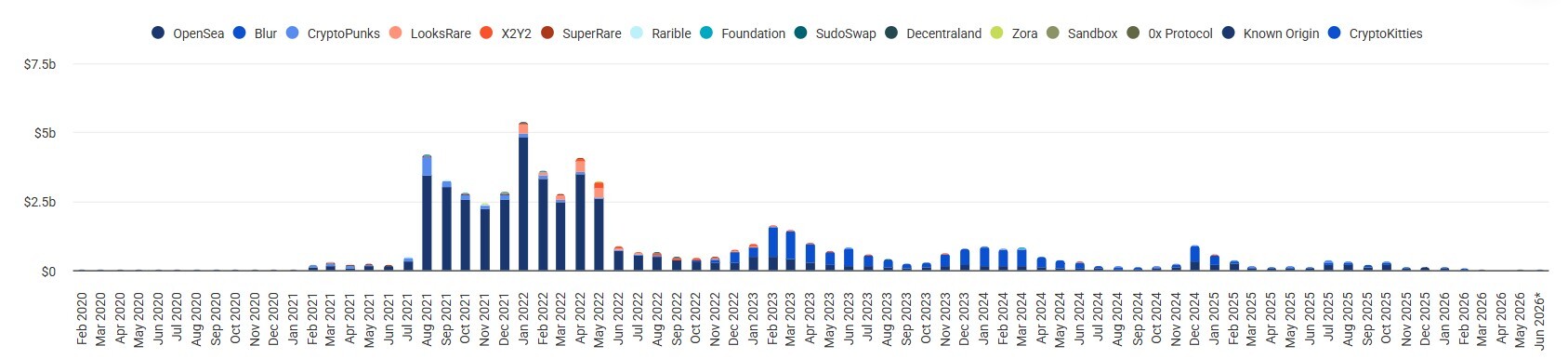
ETH NFT Marketplace Monthly Volume:
Source theblock.co ETH NFT Marketplaces
The crash was brutal
The NFT reset was not small. Ethereum NFT marketplace volume is still far below the 2021 and 2022 peak. The mass minting frenzy has also cooled dramatically, with Ethereum NFT mints nowhere near the levels seen during the height of the previous cycle.
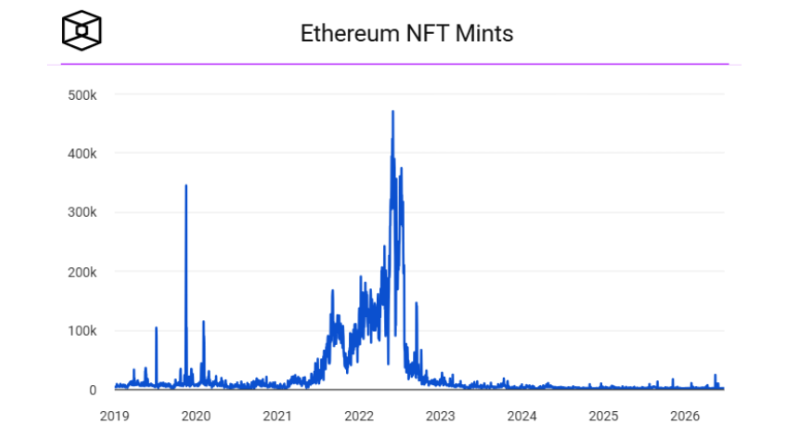
Source: theblock.com Eth NFT mints\ Solana followed a similar pattern. After sharp bursts of activity in late 2023 and early 2024, daily Solana NFT marketplace volume has also compressed.
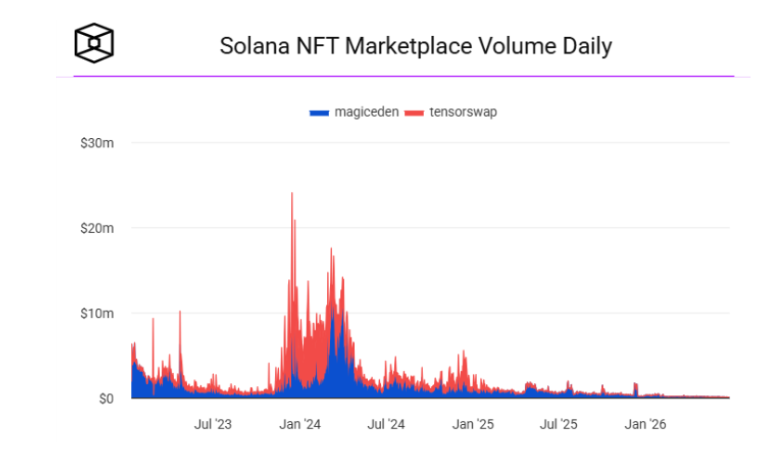
Source: theblock.co SOL NFT Volume: Data from Dune Analytics
The message from the data is clear, the easy-money NFT era is over. That does not mean there is no activity. It means the market has become much harder, much smaller and much more selective.
Instead of every new mint getting attention, buyers appear to be concentrating around collections with stronger cultural relevance, historical importance, brand momentum or real-world collectible appeal. That is a very different market, and probably a healthier one.
Are NFTs back?
Recently, there have been signs of life. According to recent CoinGecko data referenced by Bankless and Yahoo Finance, several culturally relevant Ethereum NFT collections have seen sharp short-term floor price gains.
CryptoPunks, Bored Ape Yacht Club, Pudgy Penguins, Chromie Squiggles, Azuki, Moonbirds, Doodles, CrypToadz, mfers and DeadFellaz all showed renewed activity.
At the time of the article, CryptoPunks had a floor price of 30.88 ETH (nearly 100k AUD at the time of writing), Bored Ape Yacht Club sat at 9.72 ETH, and Pudgy Penguins were at 5.24 ETH. That is not nothing, but context matters.
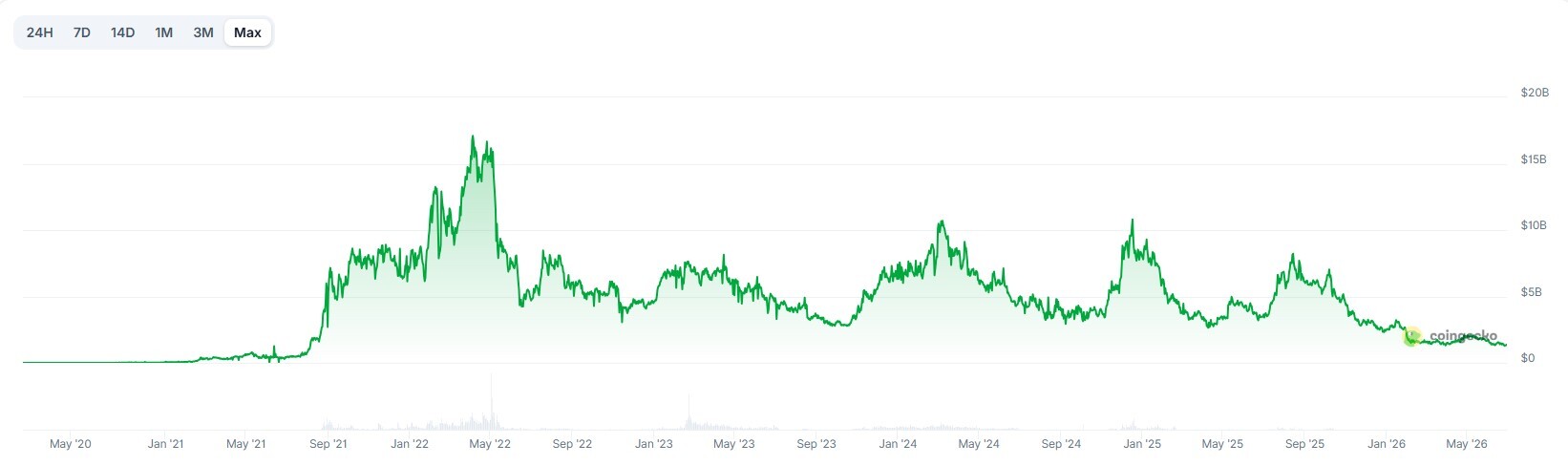
The same article noted that the broader NFT market cap was around US$2 billion. That is far below previous peaks of more than US$16 billion in April 2022 and more than US$10 billion in March 2024. So yes, NFTs are showing a pulse, but no, it is not 2021 again.
A smaller market can move quickly because it does not take as much capital to lift floor prices. For this to become more than a short-term rally, the market would need sustained volume, broader participation and demand that extends beyond the biggest collections.
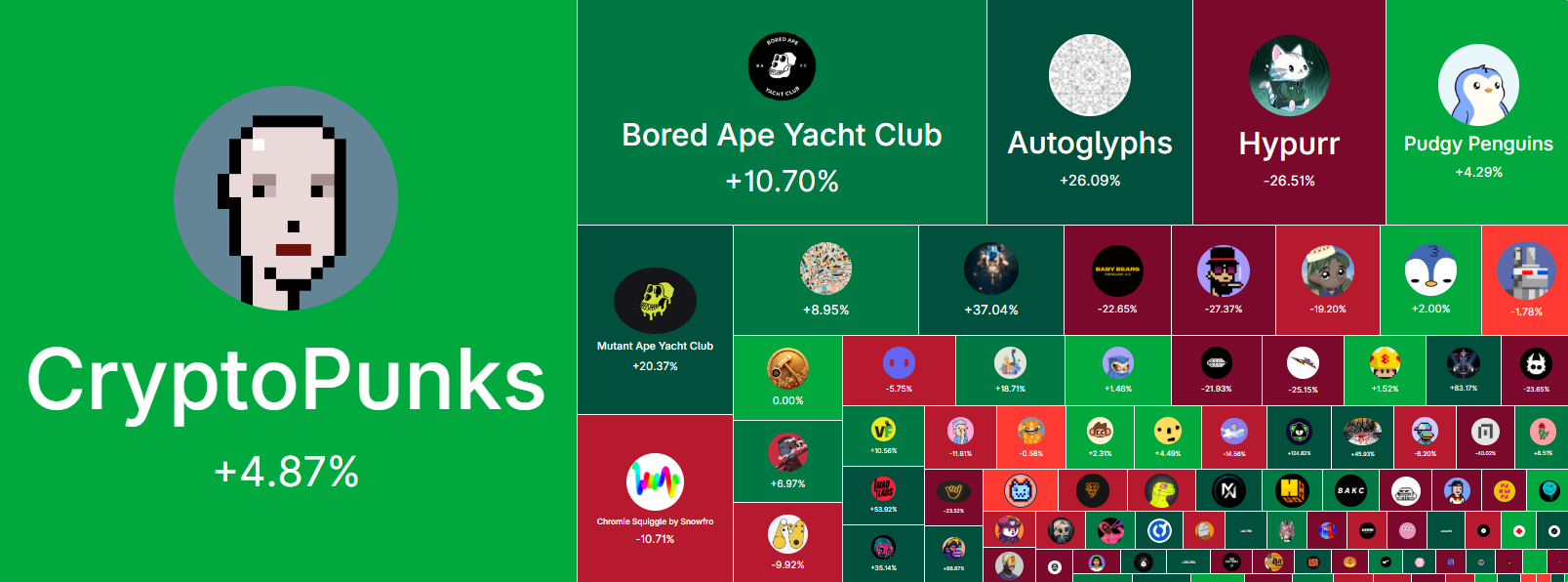
Source: Coingecko: June 2026 NFT performance.
What survived the crash?
The projects still being watched tend to have one of three things:
- Historical relevance.
- Cultural recognition.
- A stronger brand or ecosystem.
CryptoPunks remain important because they are one of the earliest and most recognisable NFT collections. They are not just profile pictures, they are part of crypto history.
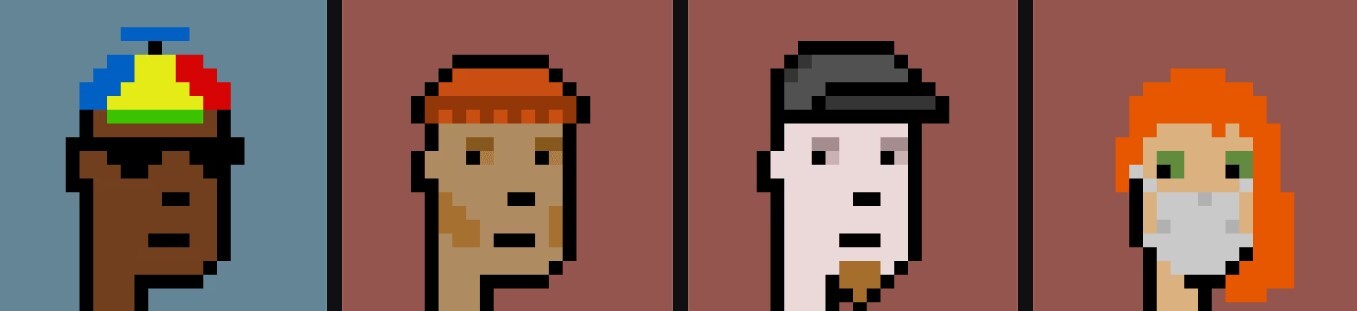
Source: Opensea.io: Cryptopunks
Bored Ape Yacht Club remains culturally relevant because it became one of the biggest social and community-driven NFT brands of the last cycle. Art Blocks and Chromie Squiggles matter because they helped define generative art on-chain, and then there are the Pudgy Penguins. Pudgy might be one of the best examples of where the NFT market is heading next.
Pudgy Penguins and the brand shift
Pudgy Penguins is one of the clearest examples of how the NFT market is changing. It started as a profile-picture collection, but the more interesting story is what happened after the hype cooled. Pudgy moved beyond the token and began building around toys, retail, gaming, characters and digital ownership. That matters because it shows where some NFT projects may be heading next.
Not endless mints.
Not vague future utility.
More recognisable brands.
More real-world distribution.
More collectibles that connect physical and digital experiences.
That does not guarantee success, but it does show how some NFT projects are trying to grow up.

The market is changing shape
The honest answer is mixed. The speculative bubble has burst. Volumes are far below previous highs. Many collections are unlikely to recover. Liquidity is thinner, buyers are more cautious, and a short-term rally in floor prices does not prove a full comeback, but the market is not dead. It is becoming more specific.
Blue-chip collections are seeing renewed interest. Pudgy Penguins is showing how NFT brands can move into mainstream retail and gaming. Tokenised physical collectibles are making digital ownership easier to understand. Art-focused collections and generative artists are still building through the downturn.
That is the real story, NFTs are no longer one big trade. They are splitting into categories; some will be cultural artefacts, some will become collectibles, some will become brand assets, some will become gaming items, some will become fine art and many will become worthless. That is what mature markets do, they separate signals from noise.
The bottom line
The first NFT cycle was about speculation, the next one may be about substance.
The projects that survive are unlikely to be the ones with the loudest Discord servers or the wildest promises. They are more likely to be the ones with cultural relevance, real communities, recognised artists, strong brands or collectible value beyond the token itself.
NFTs may never return to the same frenzy that defined 2021, but maybe they do not need to. The market is becoming more selective, more practical and more familiar. That is where Part 2 begins, because the next chapter of NFTs may not be about random mints at all. It may be about things people already understand,
Pokémon cards.
Sports cards.
Digital collectibles.
Character brands.
Fine art.
The NFT is no longer the whole story, it is becoming the ownership layer underneath culture.
Part Two coming next week.
Work Cited:
CoinGecko, “Top NFT Collection Prices Ranked by Market Cap”
CoinDesk, “NFT Market Sees 29% Daily Rise as CryptoPunk, Penguins Surge”
The Block, “Azuki NFT prices down 65% in the month following Elementals drop”
CoinDesk, “Azuki Teases Anime Series, New Artwork After Missing the Mark on Elementals Mint”
Nadini, M., Alessandretti, L., Di Giacinto, F., Martino, M., Aiello, L. M. and Baronchelli, A., “Mapping the NFT revolution: market trends, trade networks and visual features”
DISCLAIMER: The information provided in this article is for general informational and educational purposes only. It does not constitute financial, investment, legal or tax advice, and should not be relied upon as a recommendation to buy, sell or hold any digital asset, NFT, collectible or related product.
Digital assets, NFTs and digital collectibles are highly speculative and can be volatile. Prices may rise or fall significantly, and some assets may become illiquid or lose all value. Past performance is not a reliable indicator of future performance.
Before making any financial decision, consider your own objectives, financial situation and needs, and seek independent professional advice where appropriate.


