

Crypto ETFs Explained: Are You Actually Buying Crypto?
Crypto ETFs have brought traditional finance and digital assets closer together. You can now buy exposure to Bitcoin, Ethereum and a growing list of other cryptocurrencies through the share market, but there is an important catch… Buying a Bitcoin ETF is not the same as buying Bitcoin.
So what are you actually buying, how does it work, and why are crypto ETFs becoming such a big part of traditional finance?
First, what is an ETF?
ETF stands for exchange-traded fund.
Traditional ETFs can track shares, bonds, gold, commodities or entire market indexes. Rather than buying every underlying asset individually, investors buy units in a fund that trades on a stock exchange.
Crypto ETFs apply the same basic idea to digital assets.
What are you actually buying?
Take a spot Bitcoin ETF. The product is designed to follow the price of Bitcoin. Depending on its structure, the fund may hold Bitcoin directly or gain exposure through another fund that does. Investors then buy units in that financial product through a share broker.
That creates an important distinction:
Buying Bitcoin: You own BTC.
Buying a Bitcoin ETF: You own units in a financial product linked to Bitcoin.
The two may follow similar price movements, but they are not the same asset.
BlackRock's U.S. iShares Bitcoin Trust ETF, IBIT, shows how large this market has become. As of 7 August 2026, it held approximately US$48.4 billion in net assets.
Bitcoin vs a Bitcoin ETF
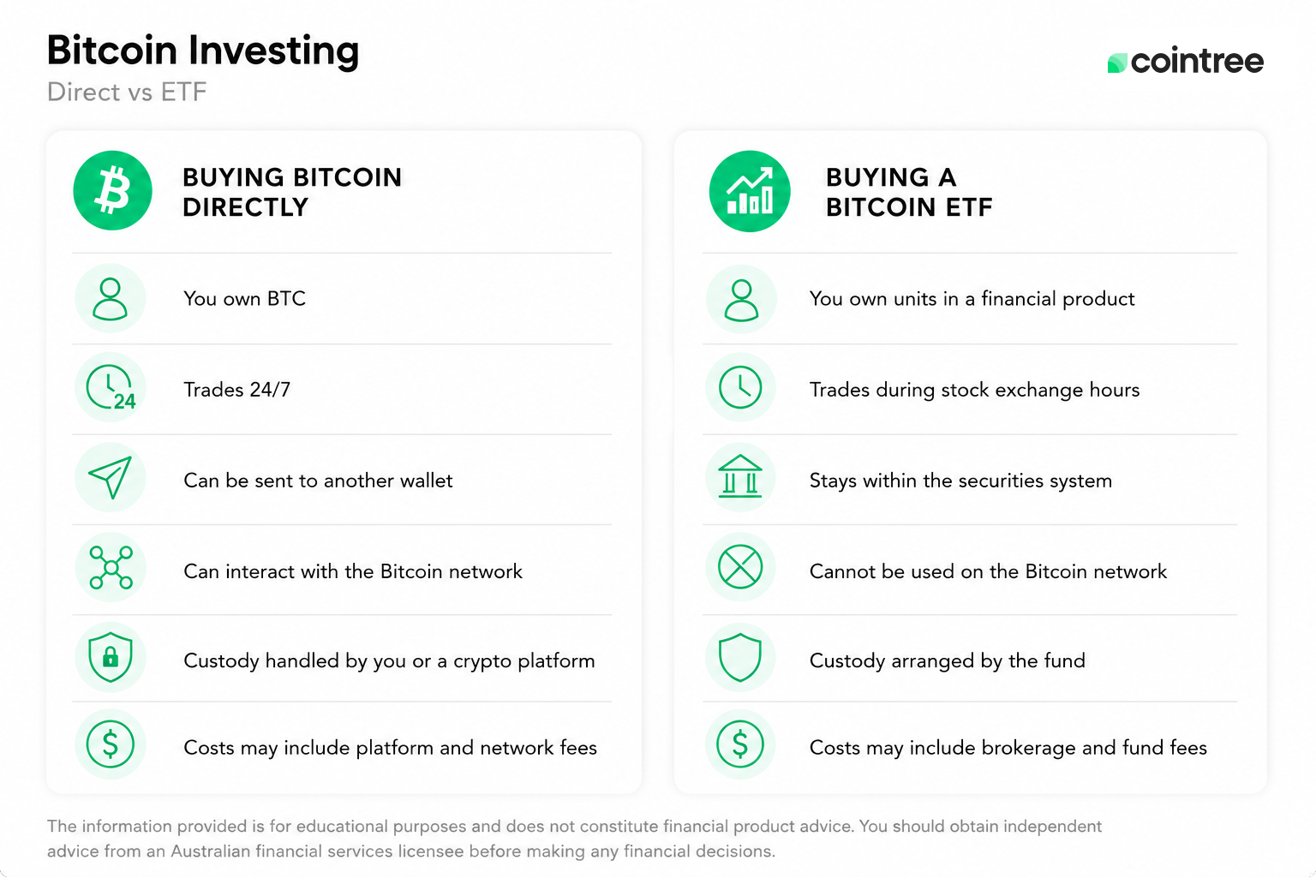
There is also one very practical difference, Bitcoin never closes, the ASX does. If Bitcoin moves overnight or over the weekend, an ETF linked to it can adjust when the share market opens again.
Buying BTC directly
You → Crypto exchange → Bitcoin → Account or wallet
Buying a Bitcoin ETF
You → Share broker → ETF → Fund/custodian → Bitcoin exposure
Similar price exposure, very different route.
How does an ETF track Bitcoin?
Buying A$100 of a Bitcoin ETF does not mean a fund manager instantly buys exactly A$100 worth of Bitcoin. ETFs have financial infrastructure working behind the scenes.
Large institutions known as authorised participants can create or redeem blocks of ETF units. This process helps keep the ETF's trading price relatively close to the value of the assets backing it.
For most investors, none of this is visible. They simply see a product trading on a stock exchange.
Not every crypto ETF is the same
The term "crypto ETF" now covers a surprisingly wide range of products.
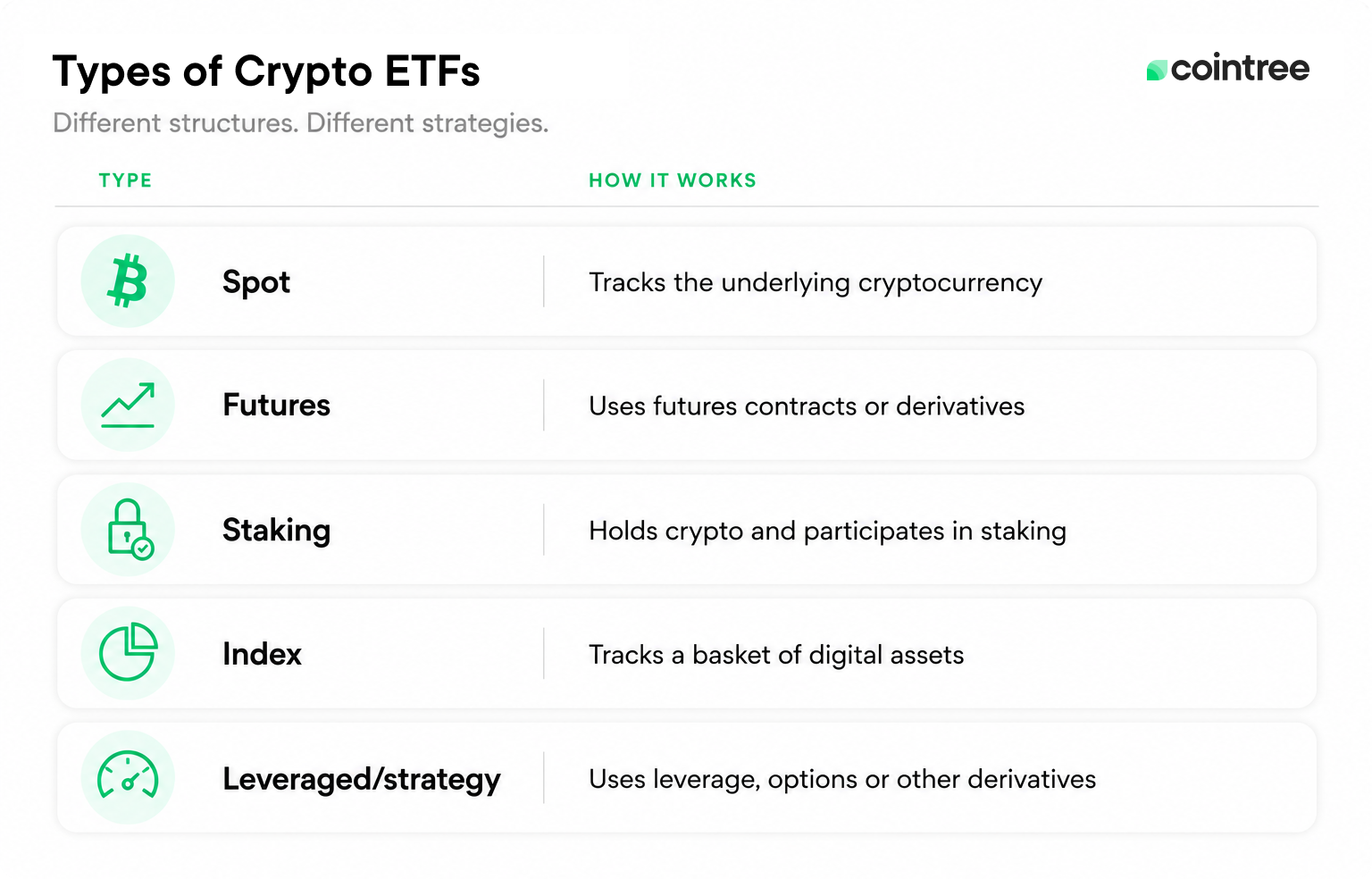
Spot products now exist for assets including Bitcoin, Ethereum, XRP, Solana, Sui and Hyperliquid.
There are also staking products, crypto index funds and more complex products using options and leverage.
Seeing "crypto ETF" in the name does not tell you everything about how the product actually works.
Bitcoin was only the beginning
Crypto exchange-traded products have expanded quickly since U.S. spot Bitcoin products were approved in January 2024.
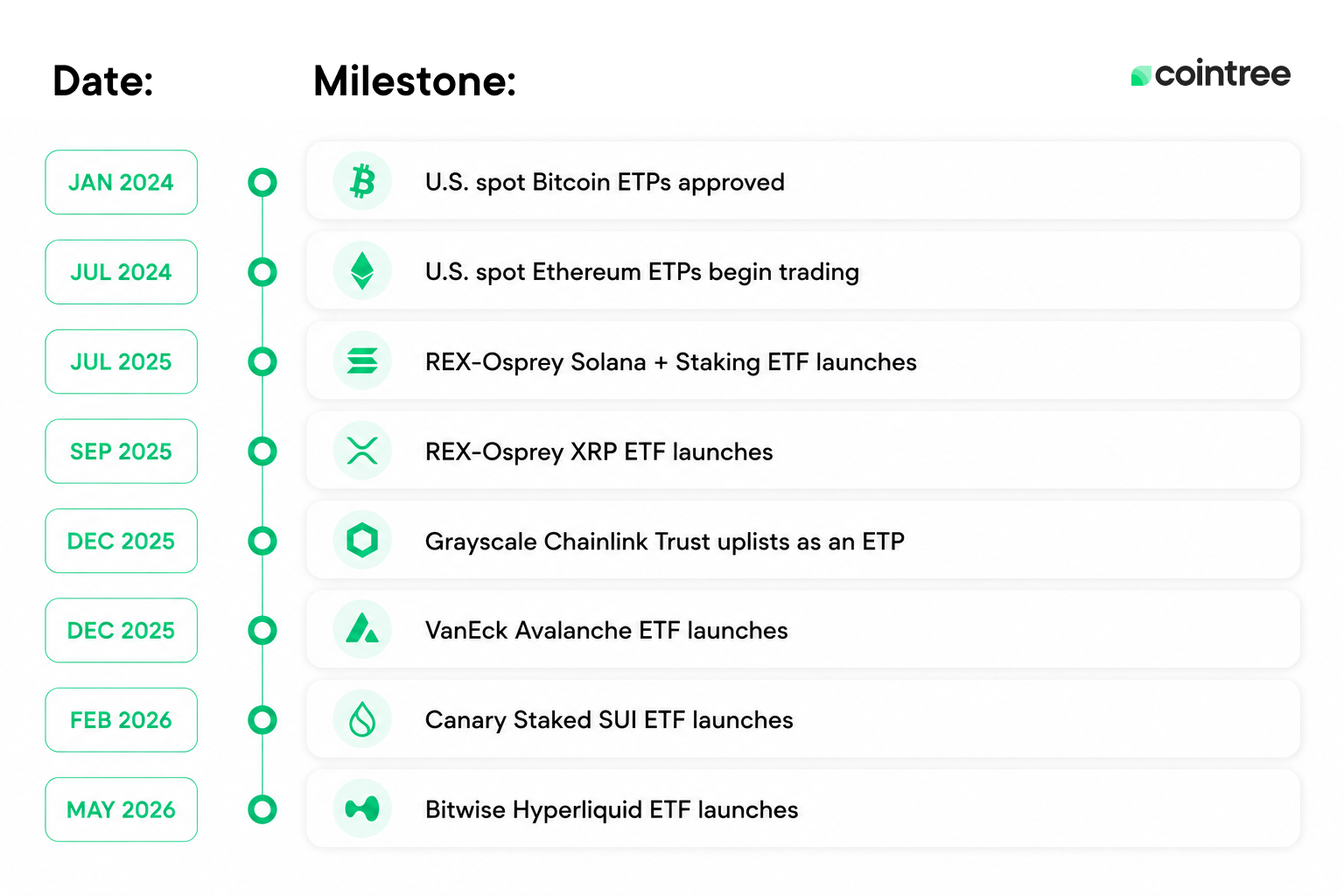
What started with BTC and ETH has now expanded into SOL, XRP, LINK, AVAX, SUI, HYPE and other digital assets.
Traditional financial firms are no longer only building Bitcoin products. They are increasingly packaging different parts of the crypto market into structures familiar to brokers, institutions and conventional investors.
Why do crypto ETFs exist?
The simple answer is access. Someone already comfortable using a share broker may have little experience with wallets, blockchain transactions or crypto custody. An ETF lets them access crypto price exposure through infrastructure they already know.
For asset managers, there is also a business model. Firms such as BlackRock, Fidelity, Grayscale, Bitwise, 21Shares and VanEck can charge fees for running these products. Crypto gets a TradFi wrapper, fund managers get another product to offer.
The takeaway
Crypto ETFs have created a new bridge between traditional finance and digital assets, but the key distinction is simple.
Buying Bitcoin means owning Bitcoin.
Buying a Bitcoin ETF means owning a financial product designed to track Bitcoin.
The price exposure may look similar. What you actually own, how it trades and what you can do with it are very different.


