

Could You Go on Holiday Using Only Crypto?
Crypto can move across the world in minutes, but can it get you through an entire holiday?
Flights, hotels, coffee, dinner, sightseeing… maybe one questionable souvenir you definitely didn't need.
We looked at three destinations where crypto has moved beyond trading screens and into real shops, restaurants and tourism infrastructure.
The test is simple: how close could you realistically get to travelling using crypto as your main way to pay?
🥇 Bhutan: The crypto tourism experiment
Bhutan might be the closest thing we have to a purpose-built crypto holiday.
The country's official tourism website says international visitors can use cryptocurrency to pay for flights, visas, the Sustainable Development Fee, hotels, guides, monument entry and purchases from local shops and roadside vendors. That is a pretty serious list.
Bhutan has partnered with Binance Pay to create a national crypto payment system aimed specifically at international travellers. More than 100 merchants participate, with the tourism authority saying payments can be made using more than 100 cryptocurrencies, including Bitcoin, BNB and USDC.
The process is familiar if you've ever paid using a QR code. Scan, choose the crypto and make the payment.
What makes Bhutan unusual is that crypto isn't just accepted by a handful of enthusiastic cafés. It has been plugged into the tourism system itself.
In theory, crypto can enter the holiday before you've even arrived in the country.
That doesn't mean every single shop in Bhutan accepts it, and travellers still need access to a compatible payment service. But compared with most destinations, Bhutan has built something surprisingly close to an end-to-end crypto travel experience.
And despite Bhutan reducing its government Bitcoin holdings during 2026, its tourism payment infrastructure remains live.
📍 The standout: Tiger's Nest Monastery
Paro Taktsang, better known as Tiger's Nest, is built into a cliff high above the Paro Valley and is considered one of Bhutan's holiest sites. Getting there requires a hike, but Bhutan's tourism authority describes it as one of the country's must-see experiences.

Source: https://www.earthtrekkers.com/ultimate-guide-hiking-tigers-nest-bhutan/
🥈 Lugano: Bitcoin city
Next stop, Switzerland.
Lugano has spent the past few years trying to answer a pretty simple question:
What happens if you make crypto genuinely usable around a city?
Through its Plan ₿ initiative, more than 400 local businesses have been enabled to accept Bitcoin, Tether and Lugano's LVGA token. That includes restaurants, retailers and other everyday services.
Bitcoin payments can also run through the Lightning Network, which is designed to make smaller BTC payments faster and more practical.
The nice part for travellers is that Plan ₿ doesn't require one specific Bitcoin wallet. Customers can use compatible wallets supporting Bitcoin Lightning, USDT or LVGA.
On the other side of the transaction, businesses don't necessarily need to keep the crypto either. Merchants can choose to have payments settled in Swiss francs.
Lugano has even taken crypto beyond normal shopping. Invoices issued by the City of Lugano can be paid using BTC or USDT, including taxes, duties and fines.
Hopefully paying a fine isn't part of your European holiday itinerary, but the fact that you can is kind of the point.
📍 The standout: Monte San Salvatore
A funicular takes you from Paradiso to the top of Monte San Salvatore, where you get 360-degree views across Lake Lugano and towards the Swiss and Savoy Alps.
A Bitcoin city surrounded by Swiss mountains isn't a bad sales pitch.
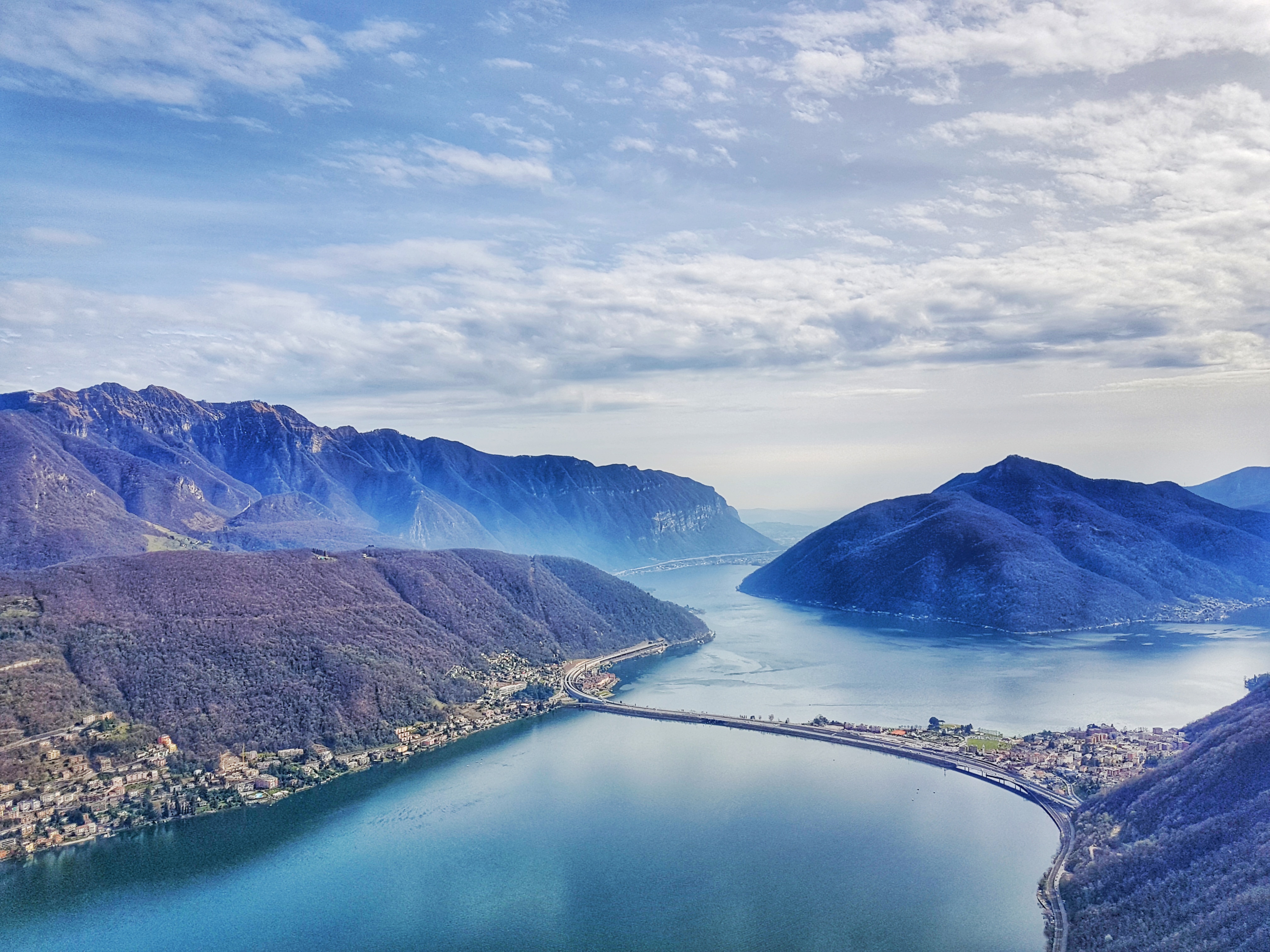
Source: https://gelatotravel.com/2017/03/20/hiking-up-monte-san-salvatore-in-lugano/
🥉 Madeira: The Bitcoin island
Madeira has taken a different approach.
There isn't a Bhutan-style national crypto tourism network or a Lugano-style city program. Instead, Bitcoin adoption has largely grown from the ground up.
Local Bitcoin organisation FREE Madeira says more than 160 businesses on the island now accept Bitcoin, giving visitors a network of places where sats can actually be spent.
The Lightning Network plays a big role here too. Instead of sending every coffee purchase directly through the Bitcoin blockchain and waiting for confirmation, Lightning allows smaller BTC payments to move much faster. That makes it far more useful for things like lunch, coffee and everyday purchases.
Madeira is probably the destination on this list where a crypto-only holiday would require the most planning. Traditional euros and cards are still the norm, and crypto acceptance isn't everywhere, but 160-plus participating businesses is enough to make spending Bitcoin part of a real trip rather than something you do once for the novelty.
📍 The standout: Pico do Areeiro
At 1,818 metres, Pico do Areeiro is Madeira's third-highest point and one of the island's most visited locations. On a clear day, you can see across Madeira's mountainous interior and as far as Porto Santo.
Your Lightning wallet may be fast, the walk up the mountain is less so.

Crypto-friendly doesn't always mean crypto-spendable.
Japan has a sophisticated crypto industry but relatively limited everyday acceptance. Australia makes it easy to buy and move digital assets, and even book parts of a holiday with them, but direct merchant payments remain scattered.
That's what makes Bhutan, Lugano and Madeira interesting. They aren't simply places where crypto is popular. They're places where someone is actually trying to make it useful at the checkout.
So, can you actually holiday using only crypto?
We're getting surprisingly close.
Bhutan shows what happens when crypto payments are built directly into tourism.
Lugano shows what happens when a city actively pushes merchant adoption.
Madeira shows how far a grassroots Bitcoin community can take things.
Japan shows the technology arriving before widespread merchant adoption, and Australia shows that booking with crypto and living on crypto are two very different things. That's probably the biggest takeaway.
A crypto holiday isn't really about finding a Bitcoin ATM anymore. It's about QR codes, Lightning payments, stablecoins and payment infrastructure that lets crypto work at an ordinary checkout.
You probably shouldn't leave the bank card at home just yet, but in a few corners of the world, using crypto on holiday is starting to look a lot less like an experiment and a lot more like an actual payment option.


